When a kettle model looks almost identical on the outside but uses different control bases or wiring layouts inside, many product teams pause at the same question: why does pole count matter at all? For buyers, engineers, and product managers working with heating appliances, understanding the Electric Kettle Thermostat is not just about compliance or component cost. It directly affects how a kettle behaves in daily use, what features it can support, and how stable that performance remains over time. At Jiatai, a professional thermostat manufacturer with decades of experience in thermal control solutions, this guide was created to clarify the real, practical differences between 3-pole and 5-pole kettle thermostats, beyond simple technical labels.
What “Pole Count” Means in an Electric Kettle Thermostat
Poles vs. functions: power switching and extra circuits
A pole in a kettle thermostat refers to an independent electrical connection path. It does not automatically indicate higher quality, longer life, or better safety. Instead, pole count defines how many separate circuits the thermostat can control or connect. In most kettle designs, one circuit is always dedicated to handling the main heating power path. This is the line that carries current to the heating element and enables boiling.
When moving from a 3-pole to a 5-pole design, the additional poles are typically used for lower-power or signal-related purposes rather than for carrying extra heating load. These may support temperature sensing, communication with a control board, indicator logic, or coordinated safety functions. The key point is that pole count expands capability, not heat output.
Why pole count matters for product requirements
Different kettle products are designed for very different user expectations. A basic boil-only kettle only needs to heat water to boiling and then shut off reliably. A variable-temperature kettle must stop heating at precise setpoints. A smart kettle may need to hold water at a target temperature, interact with digital controls, or respond to real-time feedback. Pole count determines whether the thermostat can support these layers of functionality without adding external components or redesigning the system.
What a 3-Pole Thermostat Commonly Supports
Classic boil control and safety workflow
A 3-pole thermostat is widely used in traditional electric kettles. It typically supports the core functions required for boiling water safely. This includes switching the heating circuit on and off, triggering automatic shut-off when boiling is reached, and participating in boil-dry protection by responding to abnormal temperature rise. These functions are achieved through mechanical and thermal structures inside the thermostat rather than through digital control.
Where 3-pole designs are a strong fit
Because of their straightforward structure, 3-pole electric kettle thermostats are well suited to cost-sensitive models, high-volume standard kettles, and products with stable specifications that do not change frequently. They are common in markets where users expect fast boiling, simple operation, and long service life without advanced features. For many OEM programs, 3-pole solutions offer a balanced combination of reliability, simplicity, and predictable performance.
What you don’t typically get with a 3-pole thermostat
What a 3-pole design generally lacks is the ability to manage extra sensing or communication tasks. Once the heating circuit and core safety functions are accounted for, there is limited room to integrate additional signal paths. This makes it difficult to support real-time temperature feedback, multiple setpoints, or advanced user interfaces without adding separate components elsewhere in the appliance.
What a 5-Pole Thermostat Unlocks
Two extra connections and their real-world use
A 5-pole electric kettle thermostat adds two more independent electrical paths. These additional connections are rarely used to increase heating capacity. Instead, they are typically reserved for low-power or signal-related functions. In real products, this may include linking a temperature sensor to a control board, powering indicator circuits, or enabling coordinated logic between the thermostat and electronic modules.
This expanded connectivity allows designers to integrate more intelligence into the kettle without compromising the core heating and safety functions.
Real-time temperature feedback with NTC sensing
One of the most common applications enabled by a 5-pole design is real-time temperature feedback using an NTC thermistor. In simple terms, an NTC sensor changes resistance as temperature changes. The control system interprets this signal and adjusts heating behavior accordingly. With this feedback loop, the kettle can stop heating at specific temperatures, maintain a stable keep-warm range, or respond more accurately to changing conditions inside the vessel.
Jiatai offers 5-pole thermostat solutions that integrate sensing elements and protective components in a compact structure, supporting more precise temperature management without complicating assembly.
Why feature-rich kettles trend toward 5-pole solutions
As consumer expectations evolve, more kettles are expected to do more than just boil. Preset temperatures for tea or coffee, extended keep-warm functions, and digital displays all require information beyond a simple on-off signal. A 5-pole thermostat provides the structural foundation needed to support these features while maintaining a unified and robust control architecture.
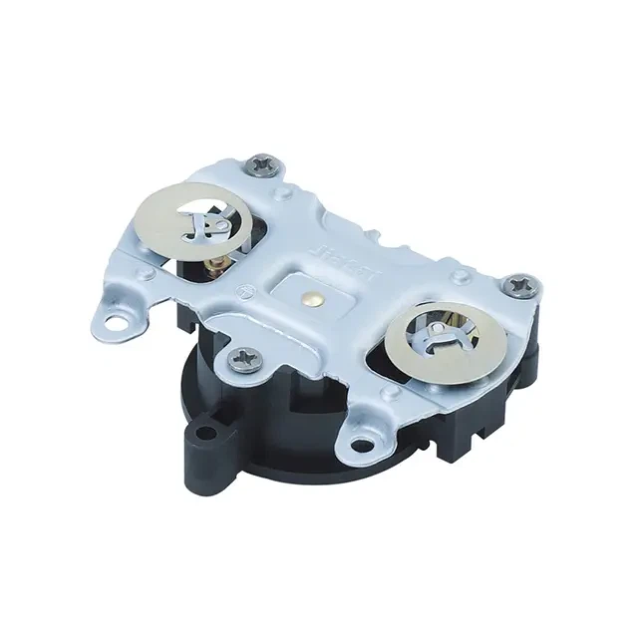
3-Pole vs. 5-Pole in Feature Terms: What End Users Notice
Features visible to the user
From a user’s perspective, the difference between 3-pole and 5-pole control often shows up in how predictable and refined the kettle feels. Variable temperature accuracy, smooth shut-off behavior, and stable keep-warm performance are all easier to achieve when the thermostat can communicate more detailed information. Users may not see the thermostat itself, but they notice when water overheats, undershoots a target temperature, or cycles inconsistently.
Features product teams care about
For product teams, the distinction goes further. A 5-pole design allows greater BOM flexibility and platform reuse. One kettle body can support multiple SKUs simply by changing control logic or interface elements, rather than redesigning the entire heating system. At the same time, safety architecture can be layered more intelligently, separating high-power switching from low-power sensing and control.
Compatibility and Design Constraints Beyond Pole Count
Mechanical interface and base coupling
Pole count alone does not define compatibility. The physical interface between the thermostat, base coupler, and kettle body must align precisely. Connector layout, contact positioning, and rotational base design all affect electrical stability and long-term reliability. Even thermostats with the same number of poles may not be interchangeable if their mechanical geometry differs.
Electrical ratings and certifications
Voltage and current ratings, endurance cycles, and thermal response characteristics remain critical. A thermostat must be selected based on the actual operating conditions of the kettle, not just on the number of poles. Jiatai designs its electric kettle thermostat products with clearly defined specifications to support compliance and consistent performance across different markets.
Quick Comparison Table: 3-Pole vs. 5-Pole Electric Kettle Thermostats
Aspect | 3-Pole Electric Kettle Thermostat | 5-Pole Electric Kettle Thermostat |
Pole count | 3 independent connections | 5 independent connections |
Typical circuits supported | Heating and core safety | Heating plus low-power or signal circuits |
Common product type | Boil-only kettles | Variable-temp and smart kettles |
Typical added components | Mechanical thermal elements | NTC thermistor, fuse elements |
Integration complexity | Low | Medium |
Best-fit buyer scenario | Cost-focused, standard models | Feature-driven, premium models |
Why Many Brands Use a Family of Thermostat Options
One platform, multiple product versions
Rather than relying on a single universal control, many brands design product families around shared structures and multiple thermostat options. This approach allows them to offer entry-level and premium models side by side while maintaining a consistent manufacturing platform. Pole count becomes a strategic variable rather than a limitation.
How Jiatai structures thermostat solutions
Jiatai organizes its product portfolio to support this modular approach. Both 3-pole and 5-pole electric kettle thermostat options are available for applications ranging from standard kettles to coffee makers and multifunction heating appliances. This structure helps OEM and ODM partners align control capability with market positioning without unnecessary redesign.
Conclusion
Ultimately, the real difference between 3-pole and 5-pole designs is not about complexity for its own sake, but about matching capability to product intent. Pole count defines the functional envelope of a kettle’s control system, influencing everything from user experience to long-term reliability. When selected thoughtfully, an Electric Kettle Thermostat becomes a foundation for consistent performance and scalable product development. If you are planning new kettle models or upgrading existing designs, Jiatai is ready to support your requirements with proven thermostat solutions. Contact us to discuss your application needs and explore how the right kettle thermostat system can strengthen your product lineup.
FAQ
Q1: Is a 5-pole electric kettle thermostat always better than a 3-pole one?
Not necessarily. A 5-pole design offers more functional possibilities, but a 3-pole thermostat may be the better choice for simple boil-only kettles where advanced features are not required.
Q2: Can a kettle designed for a 3-pole thermostat be upgraded to 5-pole?
This depends on mechanical compatibility, wiring layout, and control logic. Pole count alone does not guarantee interchangeability, and system-level evaluation is required.
Q3: Why do smart kettles rely on 5-pole thermostat designs?
Smart kettles often need real-time temperature feedback and low-power signal paths. The extra poles enable these functions without interfering with the main heating circuit.
Q4: How does Jiatai support different kettle thermostat requirements?
Jiatai develops both 3-pole and 5-pole electric kettle thermostat solutions, allowing brands to choose configurations that align with their feature goals and market positioning.