A kettle model update, a supplier adjustment, or a cost-down request often leads to a very practical question inside product teams: can an existing 5-pole control base simply be replaced with a 3-pole one? On the surface, both parts may look similar and even share a comparable footprint. Yet once the kettle is powered on, the control logic, safety response, and user experience may change in unexpected ways. Understanding how an Electric Kettle Thermostat actually functions inside the appliance is critical before making this kind of substitution. As a professional thermostat manufacturer with decades of experience, Jiatai has seen many compatibility discussions begin with this question, which is why this article focuses on a clear, safety-first framework rather than trial-and-error replacement.
The Short Technical Answer and Why It Is Rarely a Drop-In Swap
A thermostat base is a system, not just a connector
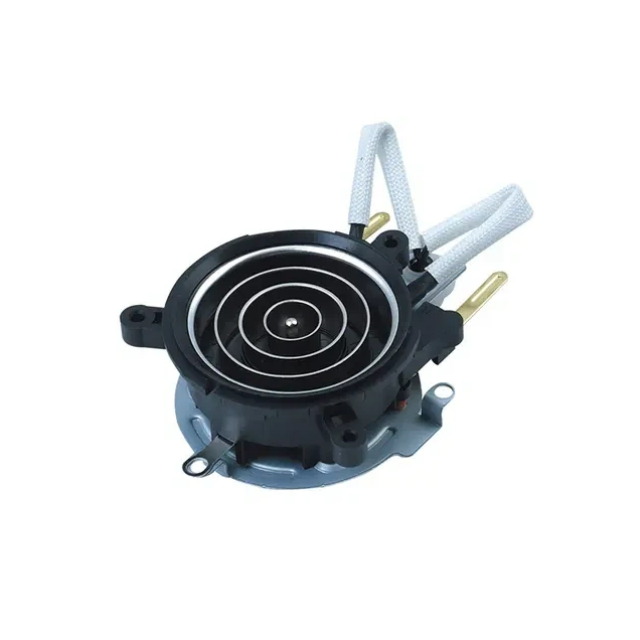
A kettle thermostat base should never be viewed as a simple plug or mechanical interface. It is a coordinated system that combines electrical switching paths, sensing lines, protective components, and mechanical alignment features. In a 5-pole design, each pole has a defined role within this system. Some carry heating power, while others support sensing, signaling, or auxiliary functions. Removing or simplifying that system by switching to a 3-pole design affects more than just the number of wires.
Even when the outer housing appears compatible, the internal architecture may no longer align with how the kettle was designed to operate. This is why a direct replacement is rarely as straightforward as matching size or mounting points.
What happens when the extra two poles are removed
The most immediate impact of replacing a 5-pole base with a 3-pole one is the loss of functionality carried by the additional poles. These extra connections often support low-power circuits or data paths that the control logic depends on. When they are removed, the kettle may lose temperature accuracy, fail to respond correctly to user input, or operate in a degraded safety mode. In some cases, the kettle may not function at all because the control board expects signals that no longer exist.
Step 1 — Identify What Those Extra Two Poles Are Doing
Low-power and data functions in typical designs
In many modern kettles, the additional poles in a 5-pole electric kettle thermostat are dedicated to low-power or signal-related tasks rather than to heating. These tasks can include supplying power to indicator circuits, enabling communication between the thermostat and a control board, or supporting logic that coordinates heating cycles. Before any replacement decision is made, it is essential to identify whether these functions are active in the original design or simply reserved for future upgrades.
Temperature sensing and real-time feedback
Some 5-pole designs integrate temperature sensing directly into the thermostat assembly. A common approach is the use of an NTC thermistor, which changes resistance as temperature changes. This signal allows the control system to monitor water temperature continuously rather than relying on a single mechanical shut-off point. In these configurations, the extra poles are not optional. They form the communication bridge between the sensor and the controller. Removing them eliminates the feedback loop that enables precise temperature control and stable keep-warm performance.
Control boards versus mechanical shut-off logic
A 3-pole thermostat typically relies on mechanical and thermal behavior to manage heating and shut-off. By contrast, a 5-pole system is often designed to work alongside a control board that interprets sensor data and user settings. The control board expects specific inputs and outputs from the thermostat base. If those signals are missing, the system may default to a fault state or behave unpredictably.
Step 2 — Check Electrical Ratings and Protection Architecture
Matching ratings beyond appearance
Even if a 3-pole and 5-pole thermostat appear similar, their electrical ratings may differ. Voltage limits, current capacity, endurance cycles, and dielectric strength are all defined at the part level. Substituting one for another without confirming these parameters introduces risks that are not visible during initial assembly. A thermostat that looks compatible may overheat, wear prematurely, or fail under repeated cycling if its ratings do not align with the kettle’s operating conditions.
Dry-boil protection and thermal cutoff strategy
Modern kettles often rely on multiple layers of protection. A mechanical or electronic controller may manage normal heating, while a thermal fuse or cutoff element provides backup protection in abnormal conditions. In many 5-pole designs, this layered approach is built into the system architecture. Replacing the base with a simpler 3-pole version can remove one of these layers, changing how the kettle responds to dry-boil scenarios or abnormal temperature rise.
Compliance and certification considerations
Changing the control architecture of a kettle can also affect compliance assumptions. Safety certifications are typically based on a specific combination of components working together. Altering the thermostat base may invalidate test results or require re-evaluation, even if the kettle still appears to function normally. This is another reason why replacement decisions must be made carefully and documented thoroughly.
Step 3 — Verify Mechanical and Interface Compatibility
Geometry, locking, and alignment
Mechanical compatibility goes beyond basic dimensions. The thermostat base must align precisely with the kettle’s coupler, contacts, and locking features. Small differences in geometry can lead to intermittent electrical contact, uneven wear, or localized overheating. These issues may not appear immediately but can reduce product lifespan and reliability over time.
Connector layout and wiring constraints
Even when two thermostat bases share a similar footprint, the internal pin layout may differ. Wire routing and harness design are often optimized for a specific pin arrangement. Replacing a 5-pole base with a 3-pole version can require rerouting or leaving unused connections, which may introduce mechanical stress or electrical instability if not carefully managed.
Step 4 — Understand the Product Impact from the User’s Perspective
Impact on smart and variable-temperature kettles
For kettles that offer variable temperature settings, keep-warm functions, or digital displays, replacing a 5-pole thermostat with a 3-pole one almost always results in noticeable performance loss. Temperature presets may no longer be accurate, keep-warm behavior may become unstable, or the kettle may fail to respond correctly to user input. These changes directly affect user satisfaction and can lead to increased returns or complaints.
Impact on boil-only kettles
In simpler boil-only kettles, a downgrade may appear more feasible at first glance. If the extra poles in the original design were not actively used, a 3-pole thermostat might support basic boiling and shut-off. However, this scenario still requires validation at the system level. Mechanical fit, electrical ratings, and safety behavior must all be confirmed before considering such a change acceptable.
Swap Feasibility Checklist — 5-Pole Base to 3-Pole Base
What You Check | What to Compare | Pass or Fail Outcome | Risk if Mismatched |
Function of extra poles | Data, low-power, or sensing usage | Fail if active functions exist | Loss of control or no operation |
NTC sensor or fuse presence | Integrated sensing or protection | Fail if removed | Temperature inaccuracy or safety risk |
Electrical ratings | Voltage, current, endurance | Fail if lower | Overheating or early failure |
Mechanical alignment | Contact position and locking | Fail if misaligned | Intermittent contact |
User feature expectations | Presets or keep-warm required | Fail if features lost | Reduced user satisfaction |
Better Alternatives to a 5-to-3 Pole Downgrade
Using a matched 5-pole replacement
In most cases, the most reliable solution is to replace a 5-pole base with another 5-pole electric kettle thermostat that matches the original functional requirements. This approach preserves feature behavior and minimizes system risk. It also aligns with the original design intent of the kettle, reducing the need for additional validation or redesign.
Selecting a functionally equivalent part family
Rather than focusing only on pole count, many sourcing teams evaluate thermostat options based on function set and interface compatibility. By matching how the thermostat interacts with the rest of the system, it is often possible to maintain performance while adjusting cost or availability. This strategy avoids unnecessary compromises and supports long-term product stability.
How Jiatai Supports Correct Thermostat Matching
Broad coverage across 3-pole and 5-pole solutions
Jiatai develops and produces both 3-pole and 5-pole thermostat solutions for electric kettles and related appliances. This range allows OEM and ODM customers to select configurations that align with their product requirements rather than forcing a downgrade or workaround. With dedicated research and testing capabilities, Jiatai focuses on ensuring that each thermostat variant delivers consistent performance within its intended application.
Information to prepare before inquiry
To support accurate matching, it is helpful to prepare clear information about the kettle design. This includes whether the product is boil-only, variable-temperature, or smart, the target electrical ratings, whether temperature sensing is used, and any mechanical interface considerations. With this information, Jiatai can recommend a suitable electric kettle thermostat configuration that aligns with both performance and safety goals.
Conclusion
Replacing a 5-pole thermostat base with a 3-pole one is rarely a simple plug-and-play decision. The additional poles in a 5-pole design often carry essential functions related to sensing, control, and safety, and removing them can compromise both performance and compliance. A careful evaluation of electrical, mechanical, and functional factors is essential before considering any substitution. As a dedicated supplier of thermostat solutions, Jiatai works closely with customers to ensure each kettle design uses the right control architecture from the start. If you are evaluating alternatives or planning a product update, contact us to discuss your requirements and identify a compatible electric kettle control base that supports your product goals.
FAQ
Q1: Can a 3-pole thermostat safely replace a 5-pole one in all kettles?
No. Many 5-pole designs use the extra poles for sensing or control functions. Removing them can affect safety and performance.
Q2: Why do some kettles stop working after a pole downgrade?
The control board may expect signals from the extra poles. Without them, the system may enter a fault state or fail to operate.
Q3: Are 3-pole thermostats only for basic kettles?
They are best suited for boil-only kettles with simple control requirements, but system validation is still required.
Q4: How can Jiatai help with thermostat replacement decisions?
Jiatai provides both 3-pole and 5-pole electric kettle thermostat options and supports customers in matching the correct configuration to their product design.