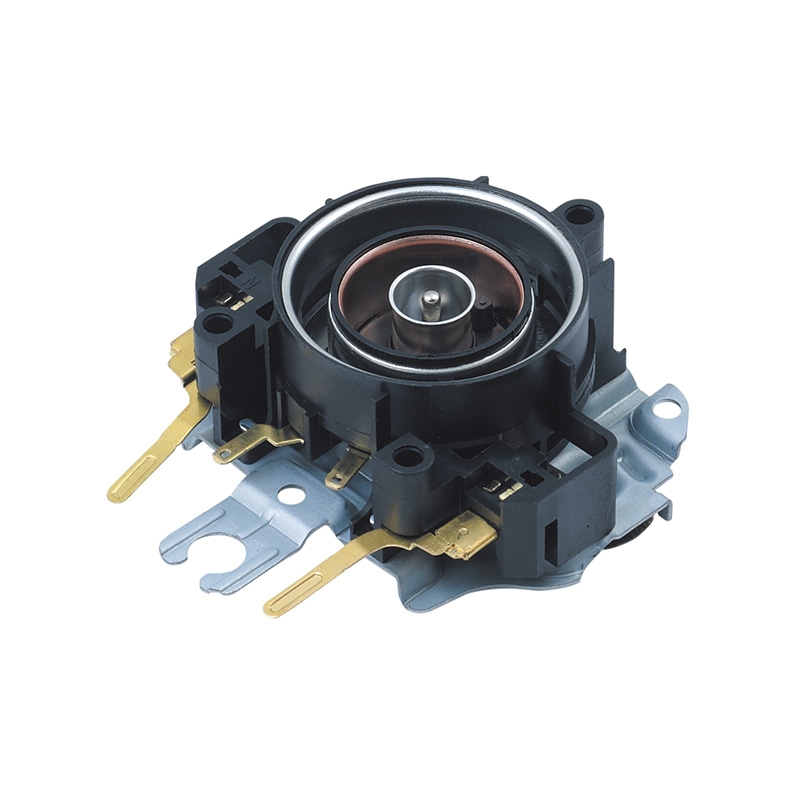
Global appliance manufacturers face a tough reality today. Strict energy regulations rapidly reshape modern product development worldwide. Consumers simultaneously demand greener, highly efficient household devices. Meeting these rising expectations requires engineering teams to rethink standard design approaches completely. To comply with strict frameworks like European ErP directives, brands must scrutinize their small domestic appliances closely. The internal thermal switch is no longer merely a basic fail-safe mechanism. It now acts as the primary gatekeeper for thermal efficiency. It directly dictates the overall power consumption of the entire unit.
This article provides engineering and procurement teams with a practical evaluation framework. You will learn how specific sensing technologies prevent thermal overshoot actively. We explain how they eliminate wasted heating cycles effectively. We will show you how to align everyday appliance designs perfectly against modern sustainability standards. Upgrading these internal components represents a vital step toward manufacturing success.
Key Takeaways
Upgrading to an energy-efficient kettle thermostat minimizes over-boiling, reducing wasted wattage by cutting power at the exact boiling point.
An NTC kettle thermostat offers continuous temperature monitoring, allowing for variable power control and superior energy efficiency compared to traditional mechanical switches.
Integrating a dry-boil protection thermostat is critical not only for user safety but for preventing continuous energy drain during fault conditions.
Evaluating thermal conductivity materials and calibration tolerances is essential for balancing component cost with overall appliance energy ratings.
The Mechanics of Energy Loss in Water Heating Appliances
Standard water kettles often waste surprising amounts of energy during routine operation. Many standard models suffer heavily from prolonged rolling boils. A powerful heating element burns enormous amounts of electricity. Letting a standard 3000-watt element boil an extra ten seconds wastes significant power. Thermal overshoot represents another hidden inefficiency in everyday designs. Heating elements retain substantial thermal mass. Even after the primary power shuts off, they continue transferring heat into the water. Phantom power draw also drains unnecessary electricity over extended periods. We must establish a clear technical baseline to understand true heating efficiency. A highly successful cycle balances the target time-to-boil against the total energy consumed.
The internal actuation mechanism fundamentally dictates this performance ratio. Mechanical snap-action switches operate very differently from modern electronic sensors. They control the precise moment of power disconnection using completely different physical principles. If mechanical actuation lags slightly, the heating element continues pulling heavy wattage. This lag creates a measurable drop in overall appliance efficiency ratings.
Engineers must consider daily consumer usage habits deeply. People frequently overfill their kettles before heating them. They heat far more water than they actually intend to use. They also re-boil water repeatedly throughout the day. People often turn on the kettle and simply walk away. Intelligent component design can actively mitigate these common everyday inefficiencies. An optimized thermal sensor reacts rapidly to changing conditions. It shuts down the main circuit the exact second the water boils. This rapid response stops unnecessary energy consumption instantly. Upgrading internal hardware components solves multiple user-driven waste issues simultaneously.
Evaluating NTC Kettle Thermostats vs. Bimetallic Switches
Appliance engineers usually choose between two primary solution categories during product development. You can specify a highly traditional bimetallic switch. Alternatively, you can select a more advanced modern electronic sensor. Each underlying technology offers distinct engineering advantages for specific product lines. Understanding these differences drives better procurement decisions.
Bimetallic switches rely heavily on the physical expansion of dissimilar metals. A small metal disc snaps abruptly at a pre-calibrated temperature. They prove highly reliable over thousands of daily uses. They cost very little to produce in massive manufacturing volumes. They also draw absolute zero standby power while sitting plugged in. However, these mechanical models carry several notable design drawbacks. Slower physical reaction times cause longer rolling boils. The generated steam must travel down a specific tube to actuate the sensor disc. This unavoidable physical delay wastes significant energy per cycle. They also fundamentally restrict kettles to a single-temperature cut-off point.
In sharp contrast, an NTC kettle thermostat utilizes an advanced electronic thermistor. Its internal electrical resistance drops smoothly as the ambient temperature rises. It sends continuous data streams directly to a central micro-controller board. Extreme operational precision represents its biggest overall engineering advantage. Incredibly tight calibration tolerances completely prevent frustrating thermal overshoot. It naturally enables highly specific variable temperature heating settings. Consumers can easily heat water to precisely 80°C for delicate green teas. The primary downside involves the strictly required printed circuit board setup. This electronic setup introduces potential standby power draw issues. Engineers must design the circuit logic incredibly carefully. Poorly designed control boards suffer from constant vampire draw.
When shortlisting control components, always match the core technology to the appliance tier. Use reliable bimetallic switches for entry-level consumer models. They keep your overall bill of materials extremely low. Specify advanced NTC systems for premium appliances. Multi-function modern kettles demand high-efficiency electronic controls.
Thermostat Technology Comparison Summary
Technology Type
Actuation Mechanism
Precision Level
Standby Power
Best Application Tier
Bimetallic Switch
Physical metal expansion (snap-action)
Moderate (±3°C to ±5°C)
Zero
Entry-level, single-temp kettles
NTC Thermistor
Electronic resistance monitoring
High (±1°C or better)
Low (requires PCB sleep mode)
Premium, variable-temp kettles
Why a Dry-Boil Protection Thermostat is Essential for Efficiency
Dry-boil functionality primarily serves as a deeply vital user safety feature. However, it also acts as a crucial secondary energy-saving fail-safe. Engineers must think carefully about fault-state energy management. If a user turns on a completely empty kettle, extreme danger arises quickly. Traditional heating elements keep heating rapidly without water to absorb the energy. They draw maximum wattage continuously from the wall outlet. This massive energy draw continues blindly until complete structural failure occurs. A dry-boil protection thermostat detects this rapid dangerous temperature spike immediately. It typically physically mounts very close to the element surface. It forcefully cuts the main circuit instantly. This swift action halts massive energy waste during a severe fault condition.
Many progressive manufacturers now evaluate clever dual-function product designs. You can structurally stack or integrate these specific thermostat modules together. A well-designed combined unit houses the primary boil-point switch securely. It simultaneously holds the essential secondary safety switch. This dual approach cleverly saves valuable internal chassis space. It significantly reduces overall manufacturing wiring complexity on the assembly line.
Lifecycle longevity represents another critical engineering benefit. Extreme heat stress damages internal appliance structures permanently. Preventing this stress actively protects the primary heating element from degradation. It preserves baseline efficiency over the entire operational lifespan of the product. A thermally damaged element inherently requires much more time to heat water. It suffers from severely degraded thermal transfer properties. Stopping dry-boil scenarios keeps the appliance running optimally. It guarantees highly efficient daily operation for many consecutive years.
Key Sourcing Criteria for an Energy-Efficient Kettle Thermostat
Procurement and engineering teams must evaluate vendor components thoroughly before mass production. You need highly specific metrics to ensure optimal final performance. We strongly recommend focusing heavily on four essential evaluation dimensions. Finding a truly energy-efficient kettle thermostat requires strict adherence to these technical criteria.
Calibration Tolerance: Acceptable variance limits matter immensely in mass production. A mechanical switch rated exactly at ±1°C saves substantially more power. It outperforms a cheaper ±3°C switch significantly over thousands of cycles. Extremely tight tolerances cut the circuit exactly at the true boiling point. Loose tolerances carelessly allow the water to over-boil unnecessarily.
Thermal Conductivity of Housings: Heat transfer speed completely dictates final actuation time. Fast thermal transfer from the steam tube to the actual sensor remains crucial. Premium manufacturers often use specialized metal alloys for superior conductivity. Faster structural heat transfer undeniably equals faster power shut-off.
Cycle Life and Degradation: Internal component durability defines long-term appliance efficiency. You must know exactly how many thousand heating cycles the switch handles cleanly. Always look for resilient components resisting timing drift over prolonged daily use. Cheaper mechanical parts can fatigue noticeably after just ten thousand uses.
Regulatory and Compliance Landscape: Global consumer markets require extremely strict laboratory certifications. You must ensure your chosen parts meet major international safety standards. Always rigorously check for verifiable RoHS, REACH, CE, and UL testing marks.
Implementation Realities and Rollout Risks
Upgrading internal appliance components introduces complex real-world manufacturing implementation challenges. Product engineering teams must balance rapid innovation strictly against hard production realities. Integrating high-precision electronic thermistors increases your base component material costs. You must weigh this added expense accurately against the target retail price point.
Printed circuit boards introduce notable structural space constraints during redesigns. You need completely adequate internal room to house electronic controls safely. You must keep sensitive electronics totally isolated from steam and internal moisture. Overall internal water capacity cannot suffer during these mandatory product redesigns. Handle ergonomics must absolutely remain comfortable for the end consumer.
Mitigating standby power remains a massive modern engineering priority. Advanced electronic sensors must never offset their active boiling efficiency. They cannot lazily draw excessive phantom power while sitting plugged in constantly. Your custom board design must actively suppress all idle energy consumption. Smart sleep states must aggressively drop wattage down to near zero.
Diligent supplier vetting often determines your ultimate retail product success. Ask highly technical questions before signing large volume production contracts. Consider rigorously implementing these essential vendor vetting criteria.
Request detailed documentary proof of automated internal calibration testing procedures.
Demand comprehensive quality control reports proving long-term batch consistency.
Ask suppliers to supply rigorous independent thermal response data logs.
Investigate exact failure rates occurring during typical mass factory production.
Conclusion
Choosing the correct thermal controls completely transforms overall appliance performance. An upgraded precision thermal controller acts as a critical market differentiator today. It directly impacts official regional ErP ratings highly favorably. It significantly boosts consumer appeal among deeply eco-conscious household shoppers.
Match your internal sensing technology directly to your specific product tier. Install optimized tight-tolerance bimetal switches in standard everyday consumer models. Deploy highly precise electronic sensors alongside durable safety modules for premium variable-temperature units.
Take proactive action by engaging your trusted component vendors immediately. Request detailed technical specification sheets for comprehensive engineering review. Order sizable sample batches for rigorous internal laboratory life testing. Analyze their proven thermal response test data carefully before mass production begins.
FAQ
Q: Does an NTC kettle thermostat consume power when the kettle is off?
A: Yes, it requires a control board which may draw minimal standby power. This must be offset by an efficient PCB design to ensure net energy savings.
Q: How does steam tube design affect the efficiency of mechanical thermostats?
A: The diameter and shape of the steam tube dictate how fast steam reaches the bimetal disc. Poor tube design delays actuation, causing energy-wasting prolonged boils regardless of the thermostat's quality.
Q: Can a dry-boil protection thermostat be reset automatically?
A: Most are designed to auto-reset once the element cools, but manual-reset variations exist for higher safety tiers. Both effectively halt wasted energy during a fault.
Q: What is the standard cycle life for an energy-efficient kettle thermostat?
A: Industry standards typically require testing to 10,000 cycles, though premium components are rated for 30,000+ cycles to ensure long-term efficiency without actuation drift.