-
How about the KSD thermostat test method?
KSD thermostat test method:
1. Clamp the thermostat in the test area and wait for the temperature in the temperature measurement area to balance before starting the test.
2. Use air as the heating medium in the test furnace, and place a thermometer or temperature sensor in the temperature measurement area.
3. Starting from 2K before the temperature enters the operating temperature tolerance range, heating or cooling is carried out at a temperature change rate of less than 1K/min. Stirring must be carried out during this period to make the temperature distribution fully uniform; the temperature distribution uniformity in the temperature measurement area is within ±0.4K Within.
-
How about the Principle and characteristics of KSD adjustable thermostat?
The principle of the new KSD adjustable thermostat is to install a heating device inside the product, using a temperature sensor as the main temperature sensing device to directly display the temperature changes on the 4-digit 8-segment digital tube display. The temperature change is detected by the digital thermometer and then transmitted to the microcontroller to directly display the output in the digital tube, and can realize self-compensation of temperature.
The new KSD adjustable thermostat has the following features:
1. In view of the non-adjustable temperature control circuit, the circuit is based on the low-power AT89S51 microcontroller and the digital temperature sensor DS18B20 to achieve the adjustable function of temperature.
2. This circuit can not only control the temperature range, but also set the temperature alarm range to reduce the workload of the digital microcontroller.
3. In view of the complex design of ordinary circuits, this circuit uses a single line to transmit data, which has the characteristics of simple design and easy operation.
4. In view of the inconvenience of downloading programs, the designed product system has simple programs and convenient download tools.
-
How about the KST thermostat debugging steps?
1. First confirm the angle sample. Look at where the angle of today's sample is.
2. Pick up the KST thermostat and first confirm whether the switch is tight or stuck, whether the white spots have fallen off, and whether there is any sound when the thermostat contacts are in contact. If there is no sound, there are two possibilities:
The angle of the thermostat is too low.
Caused by the angle of the thermostat being too high. If there is no such phenomenon, you can listen (or see) whether the angle of the thermostat is within the required range of the sample.
3. Special attention: When holding the KST thermostat, your hands must not touch the bimetal piece. Because the KST thermostat transmits temperature by a bimetallic piece. Such as touching a bimetallic piece with your hand. The temperature of your hand will change its angle.
4. If the angle is not correct, turn the temperature control switch to adjust the angle to the range we need, fix the thermostat switch with your thumb and index finger, and then perform debugging from the switch hole. Stop debugging when the thermostat is closed. action.
5. After debugging is completed, turn the KST thermostat switch to confirm whether it meets the sample requirements.
6. After confirming that it is qualified, return the KST thermostat switch to its original position and carefully place it in the special foam board for the thermostat.
-
How about the Structural features of new electric kettle thermostat?
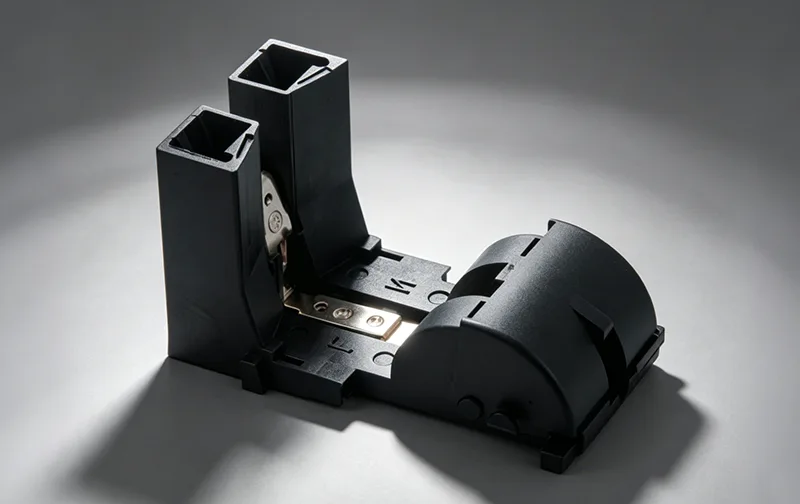
The metal conductive spring of the electric kettle thermostat is fixed to the plastic base through screws. This fixed connection structure is prone to slippage and loosening, resulting in poor contact of the conductive spring even for farmers, affecting the use effect and even preventing normal use.
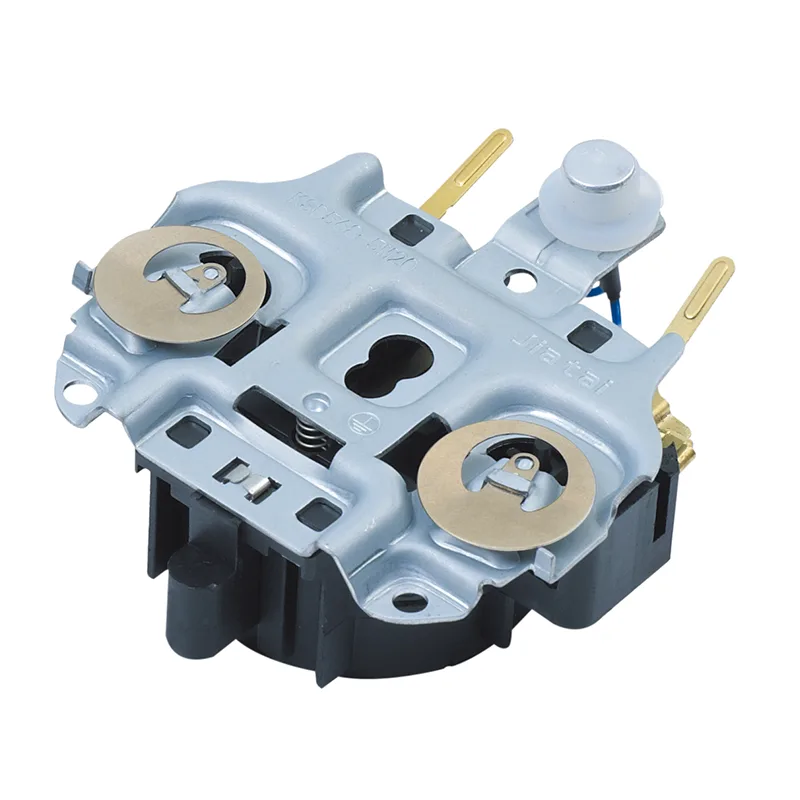
At present, a spring positioning structure for the KSD thermostat of an electric kettle has been developed that has a simple and reasonable structure, a large pressing contact surface, a firm pressing connection, and a compact structure. The structure of the KSD thermostat includes a plastic upper base and a rocker. The bottom end of the plastic upper base is equipped with a plug-in part. The plug-in part is equipped with live wire shrapnel and neutral wire shrapnel. The top of the plastic upper base is connected with an insulating cover plate. Both sides of the insulating cover plate are connected. Two heat-sensitive thermostat action components are installed.
The elastic piece positioning structure of the electric kettle thermostat presses the live line positioning conductive piece and the neutral line positioning conductive piece on the positioning platform through the insulating positioning frame. Since the contact area between the insulating positioning frame and the conductive piece is larger, this structure is compared with the above-mentioned The mentioned screw connection structure is stronger and more stable, effectively overcoming the defect of being unable to fix the conductive sheet due to screw slipping or chipping, achieving the technical effect of firm positioning and extended service life.
-
How to judge the quality of electric iron thermostat?
1. The heating power of the electric iron needs to match the temperature sensing time of the electric iron thermostat. The greater the power, the faster the heating. Therefore, the greater the power, the faster the temperature sensing speed of the electric iron thermostat.
2. The electric iron thermostat needs to be close to the inside of the electric iron, so it must not affect the outer shell and shape of the electric iron.
3. The electric iron thermostat itself is an electronic product and will also generate heat. Therefore, if the heating of the electric iron thermostat is too obvious, it will affect the temperature sensing system. In this case, you should choose a non-current electric iron thermostat.
4. When choosing an electric iron thermostat, you need to consider one thing, and that is the service life. The service life of different temperature slices is different, and the service life of the temperature slice directly affects the service life of the electric iron thermostat.
-
How about the principle of 360 degree thermostat?
Thermostat literally means a device that can control the temperature. In addition to using two methods of heating and cooling to control the temperature, there is another way to control the temperature by cutting off the source of high temperature. The 360-degree thermostat belongs to this kind of equipment.
The specific principle of the 360-degree thermostat is to use certain components inside the device to sense temperature changes in the surrounding environment, so that the components drive the control switch to cut off or conduct operations such as high temperature sources.
-
How an electric iron thermostat works?
The work of an electric iron thermostat is a combination of multiple components, including heating elements, resistors and control elements.
The electric iron itself has a heating system, which provides heat to the device to perform its work. The job of the electric iron thermostat is to receive temperature information through the electric heating element, and then judge the electric heating information through the resistor. If the input heat is greater than the preset threshold value of the electric iron thermostat, the control element controls the resistor to cut off the input of energy, and then the heat of the electric iron is reduced to a certain temperature. If the input heat of the electric iron reaches the threshold, the electric iron thermostat does not work, the resistive element does not prevent the entry of electric energy, and the electric iron is in a continuous heating state.
-
How to measure the quality of electric kettle thermostat?
1. Set the multimeter to the ohm range (Ω), insert the red test lead into the VΩmA jack, and insert the black test lead into the COM jack.
2. Remove the three-core plug from the base of the electric kettle and find the two terminals connected to the thermostat (usually L and N)
3. Use the two test leads of the multimeter to touch the two terminals respectively, and observe the displayed value of the multimeter.
4. If the displayed value is infinity (OL), it means that the thermostat is in a disconnected state. At this time, the reset button (usually marked on the base) should be pressed to close it.
5. If the displayed value is a small value (generally between 30-50 ohms), it means that the thermostat is in a closed state. At this time, you should put it into hot water (or heat it with a lighter) to turn it off. open.
6. If the displayed value is still infinity after pressing the reset button, or the displayed value is still a small value after adding hot water, it means that the thermostat is damaged and needs to be replaced.
7. If the displayed value changes to a smaller value after pressing the reset button, and changes to infinity after adding hot water, it means the thermostat is working normally.