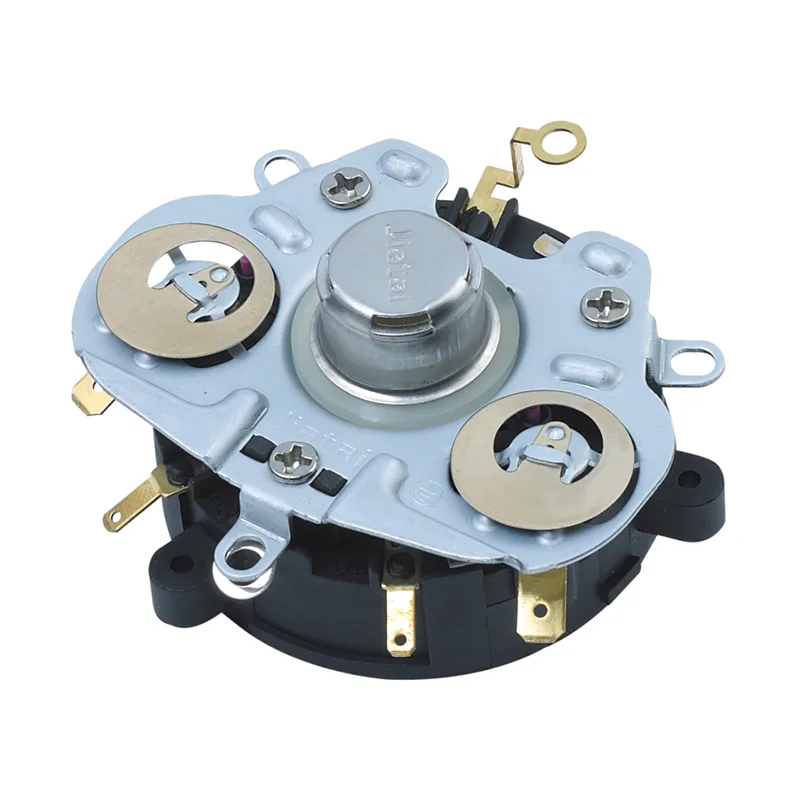
With the continuous upgrading of smart home and industrial automation technologies, Electronic Thermostat, leveraging its core advantages such as high-precision temperature control, intelligent programmability, and digital visualization, is gradually replacing traditional mechanical devices and becoming the mainstream choice for high-end temperature control scenarios. This has comprehensively driven the temperature control industry towards refinement, intelligence, and energy conservation. Different from the traditional mechanical temperature control principle, electronic temperature controllers abandon the physical deformation sensing structure and are equipped with high-precision thermal sensors, microprocessors, and integrated circuits. They collect real-time environmental temperature data and perform precise calculations through intelligent algorithms to achieve refined control of equipment start and stop.
It is reported that the core highlights of this product focus on four aspects: precise temperature control, diverse functions, intelligent adaptation, and energy efficiency. In terms of precision, the electronic thermostat can control the temperature error within ±0.5℃, completely solving the problems of large temperature differences and rough temperature control of mechanical thermostats, and meeting the requirements of precise temperature control scenarios. Functionally, it supports multi-time period programming, zone temperature control for weekdays and weekends, timed start and stop, and temperature and humidity linkage adjustment. Users can customize the temperature control scheme to meet the individualized needs of different scenarios. At the same time, the device is equipped with a high-definition digital display screen, making the temperature data and operating status clear at a glance, and the operation is intuitive and convenient.
In addition, the new generation of electronic temperature controllers support the expansion of the Internet of Things and can be connected to smart home systems and cloud platforms, enabling remote monitoring, remote temperature adjustment, operation data recording and energy consumption statistics. They possess intelligent functions such as adaptive temperature control, abnormal alarm, and self-check for faults. The equipment uses electronic components that are resistant to high and low temperatures and anti-interference, and can still operate stably in complex electromagnetic environments and scenarios with temperature and humidity fluctuations. This effectively reduces ineffective operation of the equipment and lowers energy consumption by 15% to 30%. Currently, this product is widely used in high-end residential HVAC, commercial central air conditioning, precision instruments, constant temperature laboratories, and intelligent breeding, etc., and has become the core solution for efficient and energy-saving temperature control.
We use cookies to offer you a better browsing experience, analyze site traffic and personalize content. By using this site, you agree to our use of cookies. Privacy Policy